
Introduction to Traditional Moussaka Recipe
What is Moussaka and Why You'll Love It?
Moussaka is a classic Mediterranean dish that beautifully showcases the flavors and ingredients of Greek cuisine. Picture a hearty casserole filled with layers of juicy beef mince, sweet roasted eggplants, and a velvety béchamel sauce—what’s not to love? This traditional moussaka recipe perfectly balances rich and comforting flavors, making it an ideal dish for family gatherings or cozy dinners with friends.
Originating in the Balkans, moussaka has become a beloved staple in Greek homes, often served during festive occasions. The dish's versatility allows for adaptations while still maintaining its comforting essence. Moussaka is not just a meal; it’s an experience that combines hearty vegetables and flavorful meat to create a rich, satisfying dish.
Baking moussaka is a bit of an art form, as each layer adds to the overall depth of flavor. Imagine diving into a forkful bursting with textures and tastes! Each bite tells a story of tradition, love, and culinary creativity. Want to impress your friends or unwind after a long day? This dish is sure to do the trick. Explore this traditional moussaka recipe for an unforgettable journey into Greek gastronomy! For more insights on the cultural significance of moussaka, check out this article from the Greek Ministry of Culture.
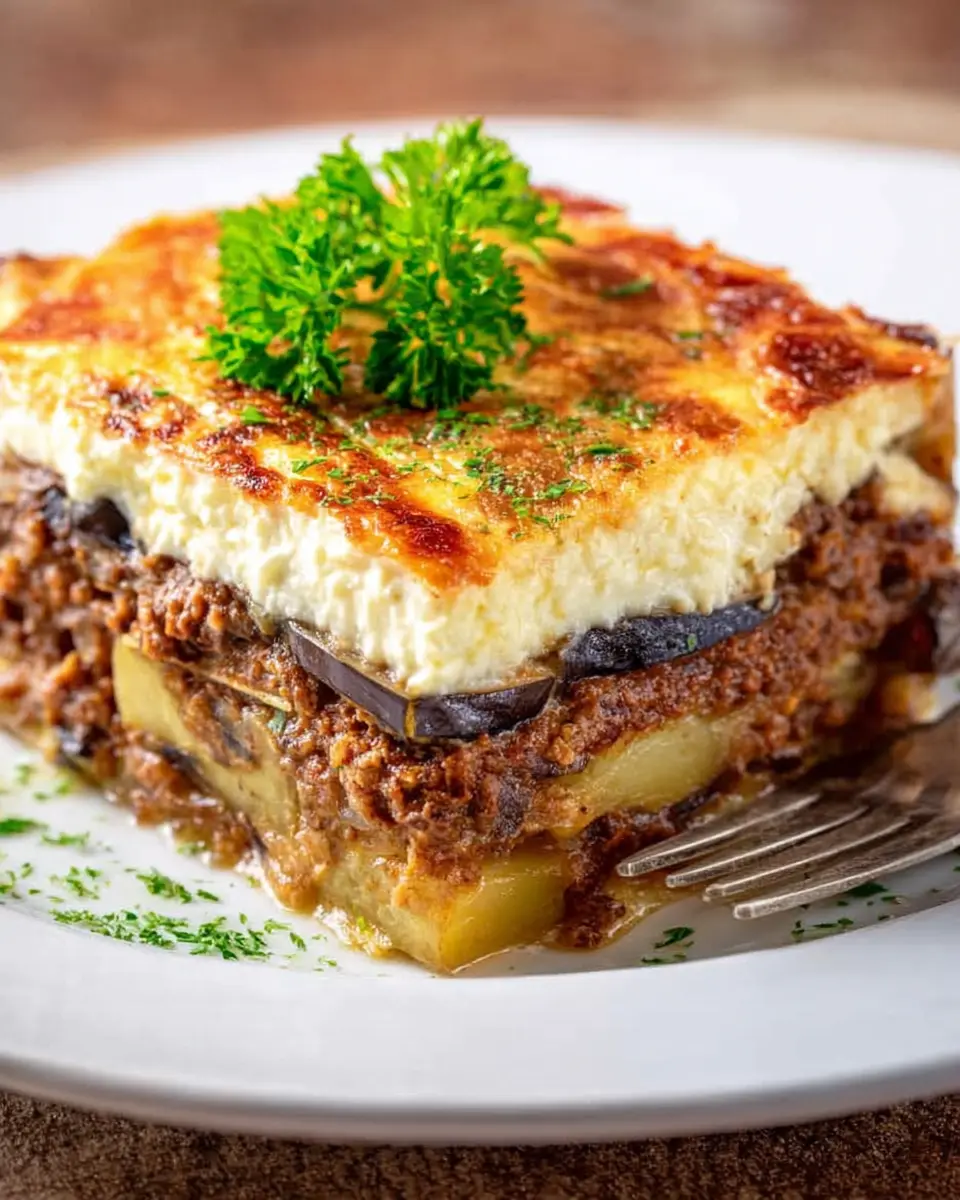
Ingredients for Traditional Moussaka
Creating a delicious traditional Moussaka recipe at home requires a handful of key ingredients for each layer. Let’s break it down so you can be well-prepared for your culinary adventure!
Base ingredients
To get started on your Moussaka, you’ll need:
- 6 eggplants: These will provide a juicy, savory flavor.
- 5 potatoes (optional): Adding these gives your dish a heartier texture.
- Vegetable oil: Essential for frying the eggplants, helping to enhance their taste and achieve that beautiful golden color.
Ingredients for the meat sauce
The heart of your Moussaka lies in the meat sauce, which includes:
- 750g beef or lamb mince (about 26 oz): This protein forms the foundation of the sauce.
- 2 red onions (chopped) and 2 cloves of garlic (chopped): They add aromatic depth to your dish.
- 1 tin chopped tomatoes (400g / 14oz) and 2 tablespoon tomato paste: These provide the essential tomato flavors.
- 1 teaspoon sugar: A touch of sweetness balances the acidity of the tomatoes.
- A pinch of sea salt and freshly ground black pepper: For seasoning to taste.
- 1 bay leaf, 3–4 whole cloves (optional), and a pinch of cinnamon or one cinnamon stick: These spices add complexity to your sauce.
- ¼ of a cup olive oil: For sautéing, providing healthy fat and richness.
Ingredients for the béchamel sauce
Finally, the creamy béchamel sauce brings your Moussaka together:
- 900ml milk (31 fl.oz): The base for your creamy sauce.
- 120g butter (4 oz) and 120g flour (4 oz): Used to create the roux, thickening the sauce.
- A pinch of nutmeg: Just enough to add warmth and a hint of flavor.
- 2 egg yolks: These enrich the sauce and give it that velvety texture.
- 100g Parmigiano-Reggiano or Kefalotyri (3.5oz): For that cheesy, savory finish.
This gathering of ingredients will help you create a mouth-watering Moussaka that’s bursting with flavor. Feel free to check out resources like Serious Eats for tips on ingredient quality and preparation techniques!
Step-by-Step Preparation of Traditional Moussaka
Embarking on the journey to create a traditional moussaka recipe is a rewarding experience filled with delicious layers of flavor. This classic Greek dish combines eggplants, potatoes, a rich meat sauce, and creamy béchamel, resulting in a culinary delight that's perfect for gatherings. Let’s dive into the step-by-step preparation!
Prepare the eggplants and potatoes
First things first: you’ll need to prep those beautiful eggplants. Slice them into about half an inch thick rounds, sprinkle them generously with salt, and let them sit for about 30 minutes. This process draws out excess moisture, helping to reduce bitterness and achieve a firmer texture when cooked.
While the eggplants are resting, you can peel and slice the potatoes, making similar slices. For a crispy finish, consider frying both the eggplants and potatoes in vegetable oil until they are golden brown. This adds a wonderful depth to your moussaka. After frying, be sure to place them on paper towels to absorb extra oil.
Make the meat sauce
Next up is the meat sauce, the heart of your moussaka! In a large pot, heat some olive oil over medium heat and sauté chopped onions and garlic until they soften and become fragrant. Add the minced beef (or lamb) and cook until browned. Stir in a tin of chopped tomatoes, tomato paste, a pinch of sugar for balance, and let the mixture simmer. Season it with salt, pepper, bay leaf, and a whisper of cinnamon for an authentic touch. If you want to deepen the flavors, let it simmer for at least 30 minutes. If you’re curious about food pairings, you could explore alternatives to wine, like a splash of broth for richness.
Prepare the béchamel sauce
The final layer that elevates your moussaka is the rich béchamel sauce. In a saucepan, melt butter over medium heat, then whisk in flour to create a roux. Gradually add warm milk, stirring continuously until the mixture thickens into a smooth sauce. Season it with a pinch of nutmeg and a bit of salt, then whisk in the egg yolks and grated cheese. Make sure it’s well combined and creamy. This luscious sauce is what ties the dish together!
Layer the moussaka
Now, let’s build your masterpiece! In a baking dish, start with a layer of potatoes, followed by a generous layer of meat sauce. Next, add your eggplant slices, and finish off with a thick layer of béchamel sauce. Make sure to spread it evenly to create that picturesque top layer.
Bake to perfection
Preheat your oven to 180°C (350°F) and bake the moussaka for about 45 minutes or until the top is golden brown and bubbling. The enticing aroma will fill your kitchen while it cooks, making it hard to resist! Once it’s out of the oven, give it a few minutes to rest before slicing into it. This helps the layers set beautifully and makes serving easier.
By following these steps, you’ll not only be creating a delicious traditional moussaka recipe but also making memories with every bite! Enjoy your culinary adventure and the heartwarming flavors of Greece!
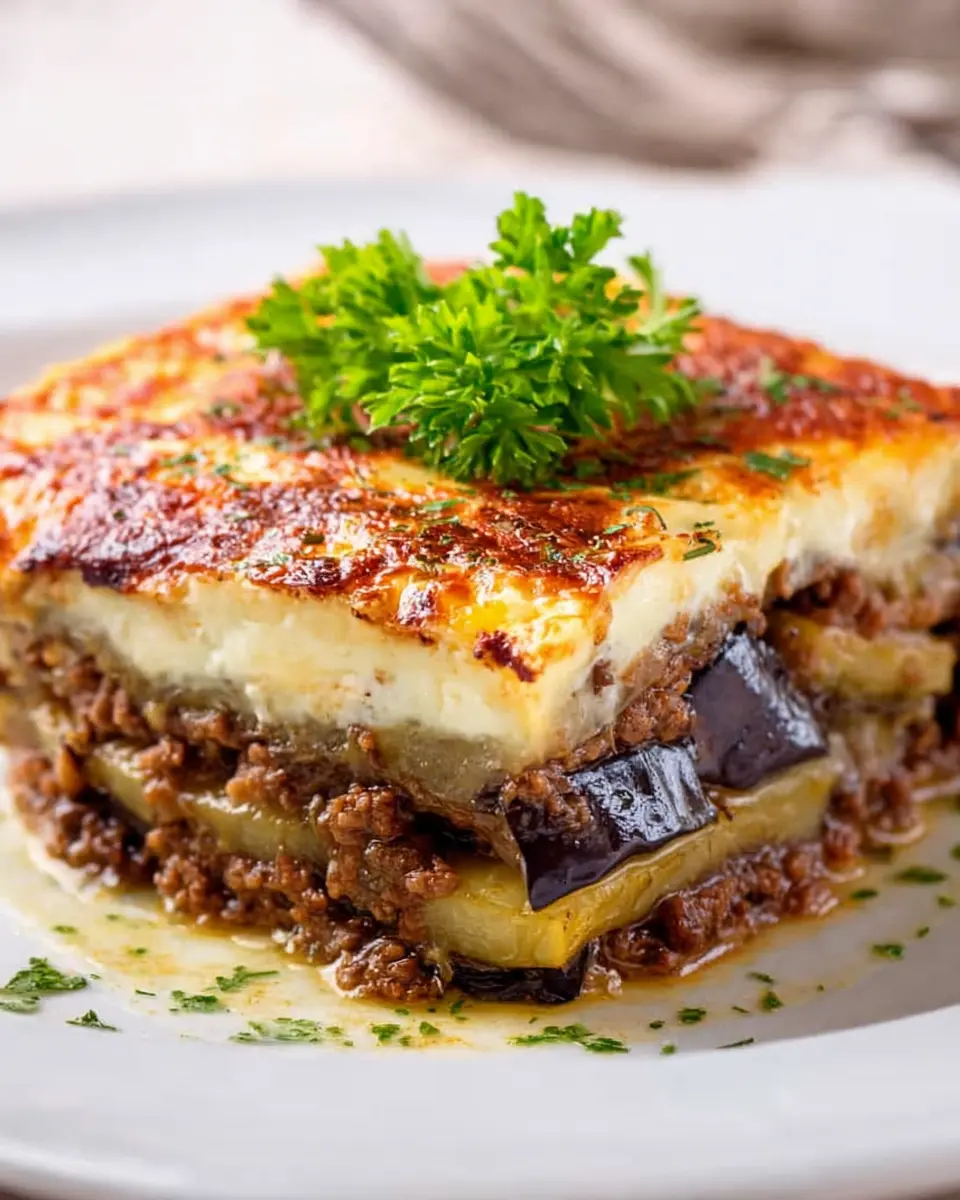
Variations of Traditional Moussaka
Vegetarian Moussaka
For those leaning towards a plant-based lifestyle, a vegetarian moussaka is a fantastic alternative! Instead of meat, use a hearty blend of lentils or chopped mushrooms alongside those beloved layers of eggplant and potatoes. Adding sautéed zucchini and a sprinkle of feta can elevate the dish even more, creating a beautiful balance of flavors. Check out our detailed guide on vegetarian cooking for more delicious recipe ideas!
Moussaka with Zucchini
If you’re looking to mix things up, consider a moussaka with zucchini. This variation involves thinly sliced zucchini layered with eggplant, adding a fresh twist to the classic moussaka experience. The added moisture of zucchini complements the creamy béchamel sauce perfectly. It’s a fabulous way to make use of seasonal produce while still enjoying the comfort of this beloved Greek dish. Don't hesitate to explore more about zucchini recipes to discover even more tasty options!
Cooking Tips and Notes for Traditional Moussaka
Tips for Frying Eggplants
Frying eggplants can sometimes feel like a challenge, but it doesn’t have to be! For a lighter texture, sprinkle salt on sliced eggplants and let them sit for about 30 minutes. This helps draw out excess moisture and bitterness. Rinse and dry the slices thoroughly, then fry in hot vegetable oil until golden brown. You can also grill them for a healthier option, which adds a nice smoky flavor to your traditional moussaka recipe.
Notes on Béchamel Sauce
A creamy béchamel sauce makes all the difference in your moussaka. When making yours, whisk steadily to avoid lumps. If it gets too thick, you can always add a splash of milk to reach your desired consistency. A pinch of nutmeg will elevate the flavor, making it a lovely complement to the rich meat sauce. If you want to add an authentic touch, try using Kefalotyri cheese for that signature Greek flavor!
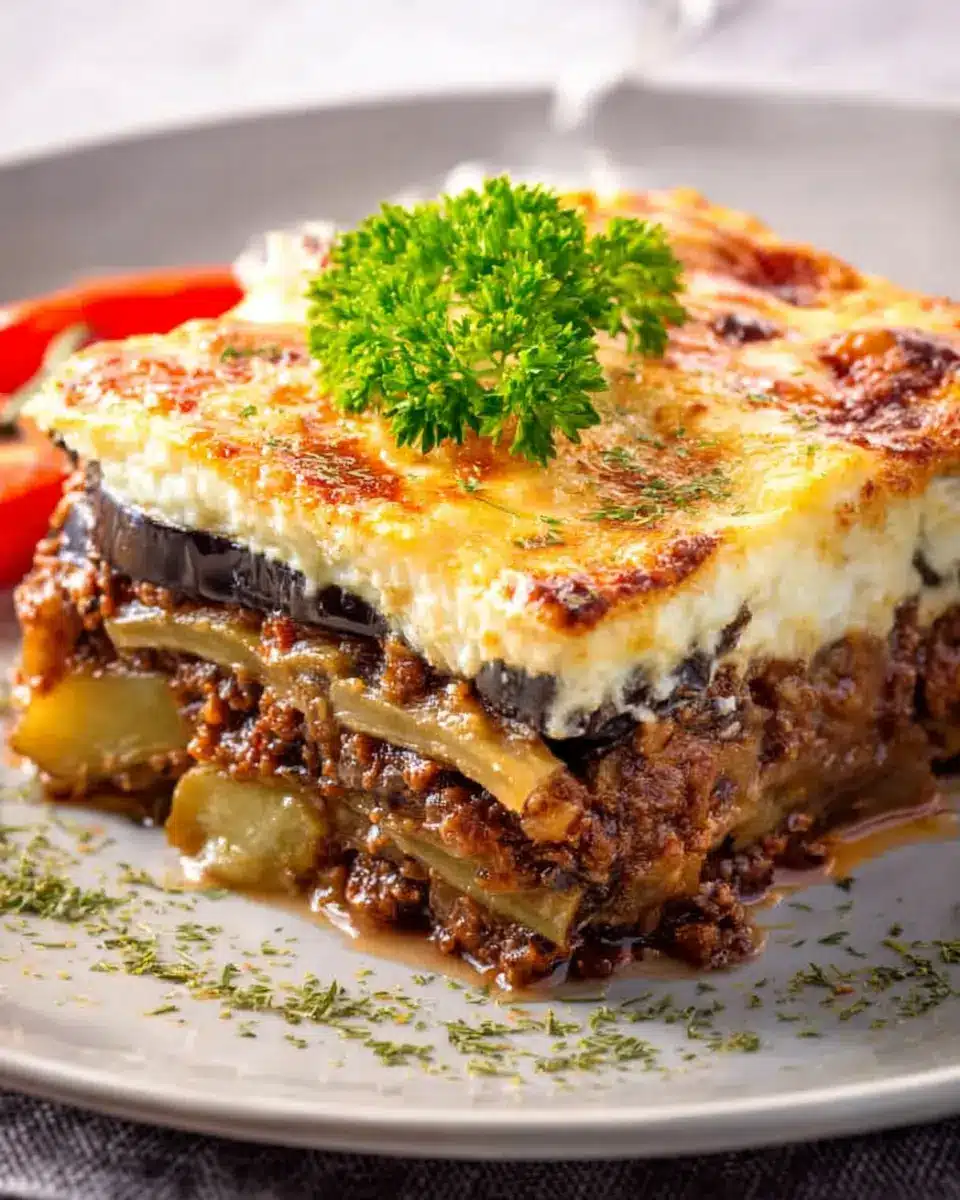
Serving Suggestions for Traditional Moussaka
Pairing with Salads
To complement your delightful traditional moussaka recipe, consider serving it alongside a refreshing Greek salad. The crispness of cucumbers, the sweetness of tomatoes, and the briny notes of feta create a beautiful balance with the rich layers of your moussaka. You can also try a simple mixed green salad drizzled with a lemon-olive oil vinaigrette for a light, zesty touch.
Best Wines and Drinks to Accompany
While you might typically opt for a glass of red wine, there are excellent non-alcoholic alternatives that pair well with moussaka. Sparkling water with a squeeze of fresh lemon can cleanse your palate beautifully. Alternatively, a chilled iced tea infused with fresh herbs like mint or basil adds a refreshing twist that enhances the meal. If you're feeling adventurous, consider a non-alcoholic beer for a hearty, complementary drink.
Time Breakdown for Traditional Moussaka
Preparation Time
With about 45 minutes dedicated to preparing your ingredients, you'll be well on your way to a delicious traditional moussaka recipe. Use this time to chop your vegetables, prepare the meat sauce, and whip up that creamy béchamel.
Cooking Time
The cooking process will take roughly 60 minutes. During this time, you'll be layering those heartwarming ingredients and watching them meld beautifully in the oven.
Total Time
In total, you’re looking at around 1 hour and 45 minutes from start to finish. It may seem lengthy, but trust us; the end result is well worth the wait. Enjoy every bite of homemade goodness and bring a taste of Greece to your table!
For more tips on making the perfect moussaka, check out Greece’s culinary heritage to deepen your appreciation of this beloved dish.
Nutritional Facts for Traditional Moussaka
When diving into the world of traditional moussaka, knowing the nutritional breakdown can enhance your meal planning. Here’s a quick glance:
Calories
One serving of this traditional moussaka recipe contains approximately 400-450 calories, making it a hearty option for dinner.
Protein
This dish is packed with protein, offering around 20-25 grams per serving, thanks to the rich beef or lamb mince layered within.
Total Fat
While deliciously creamy, one serving has about 25 grams of total fat, primarily from the béchamel sauce and oil used in cooking.
For more insights into balancing your meals, consider checking out sources like the USDA FoodData Central for detailed nutritional information! Enjoy your cooking adventure!
FAQ about Traditional Moussaka
Can I make moussaka in advance?
Absolutely! In fact, making your traditional moussaka recipe a day ahead can enhance the flavors. After preparing the layers, simply cover the dish and refrigerate. When you’re ready to serve, bake it straight from the fridge, adding a bit of extra time to ensure it's heated through. Just imagine serving a dish that’s not only filled with delicious layers but also infused with more flavor from marinating overnight!
What can I substitute for beef mince?
If you're looking for alternatives to beef, you have plenty of tasty options! Ground turkey, lamb, or even a plant-based option like lentils can work beautifully. For a traditional moussaka recipe, these substitutes will still offer a hearty texture and complement the eggplants perfectly.
How to store leftovers of moussaka?
Storing leftover moussaka is simple. Allow it to cool completely, then cover it tightly with plastic wrap or aluminum foil. You can keep it in the fridge for about 3-4 days or freeze it for up to 3 months. Just reheat in the oven for best results—you might find that it tastes even better the next day! For more tips on food storage, check out this article from the Food Safety and Inspection Service.
Conclusion on Traditional Moussaka Recipe
Creating this traditional moussaka recipe is a rewarding culinary journey. Layers of flavor come together in this iconic Greek dish, making it perfect for family gatherings or cozy dinners. Don’t hesitate—give it a try and bring a piece of Greece to your table. You'll be glad you did!
Traditional Moussaka recipe with eggplants (aubergines) and potatoes
Equipment
- Oven
- frying pan
- Saucepan
- baking dish
Ingredients
Base ingredients
- 6 pieces eggplants
- 5 pieces potatoes optional
- vegetable oil for frying the eggplants
Meat sauce
- 750 g beef or lamb mince (26 oz)
- 2 pieces red onions chopped
- 2 cloves garlic chopped
- 1 tin chopped tomatoes (400g / 14oz)
- 2 tablespoon tomato paste
- 1 teaspoon sugar
- 1 glass red wine
- sea salt to taste
- freshly ground black pepper to taste
- 1 piece bay leaf
- 3–4 pieces whole cloves optional
- 1 pinch cinnamon or one cinnamon stick
- 0.25 cup olive oil
Bechamel sauce
- 900 ml milk (31 fl.oz)
- 120 g butter (4 oz)
- 120 g flour (4 oz)
- nutmeg a pinch
- 2 pieces egg yolks
- 100 g Parmigiano-Reggiano or Kefalotyri (3.5oz)
- salt to taste
Instructions
Cooking Steps
- Prepare the eggplants by slicing them and frying them in vegetable oil until golden brown.
- Peel and slice the potatoes if using, and prepare them in a similar manner.
- In a pan, sauté the chopped onions and garlic until translucent, then add the minced meat and cook until browned.
- Add the chopped tomatoes, tomato paste, sugar, wine, and spices, then let simmer to create the meat sauce.
- For the béchamel sauce, melt butter in a saucepan, whisk in flour, then gradually add milk while stirring to avoid lumps.
- Once thickened, add egg yolks, cheese, and nutmeg, mixing well.
- Layer fried eggplants, potatoes, and meat sauce in a baking dish, then pour the béchamel on top.
- Bake in the oven at 180°C (350°F) for 45 minutes or until golden brown and bubbling.



Leave a Reply